
Why Warmth, Preparation and Good Equipment Matter in Irish Ocean Activities
One of the biggest barriers to ocean participation in Ireland is not fear, ability, or even access. More often than not, it is simply being cold.
People can arrive at the beach full of enthusiasm. Children are excited. Parents are hopeful. Everyone is curious to give it a go. But once someone enters cold Atlantic water without the right preparation or equipment, the experience changes very quickly. Attention narrows. Confidence drops. The focus shifts from enjoyment and curiosity to simply wanting to get out of the water.
Over time, working with different groups around the coast, it became clear that comfort plays a much bigger role in learning than many people realise.
A good first experience in the ocean is delicate. It can shape someone’s relationship with the water for years. If that first experience is cold, uncomfortable, or overwhelming, there is a strong chance the person will not want to return. This is particularly true for children and teenagers, whose confidence in the water is still developing.

In Ireland, the ocean environment asks more from participants than many warmer countries do. The coastline is spectacular, but it is also exposed, tidal, and cold for much of the year. Water temperatures fluctuate significantly. River mouths can push colder freshwater into the sea. Wind changes how conditions feel very quickly. A sunny day does not necessarily mean warm water.
Because of this, preparation matters.
This is where wetsuits become important, not as lifestyle products or symbols of surf culture, but as practical tools that allow people to stay comfortable long enough to learn. Warmth enables participation. Participation enables confidence. Confidence creates the space for curiosity, awareness, and enjoyment.
When someone is warm in the water, they relax. They begin to notice things around them rather than focusing entirely on discomfort. They listen more carefully. They observe conditions better. They stay present in the experience. Learning deepens naturally from there.
This becomes especially obvious during youth sessions. A child who is properly equipped can spend meaningful time exploring, floating, paddling, and engaging with the environment. A child who is cold often loses confidence quickly, becomes distracted, and understandably wants to leave the water. One uncomfortable participant can also shift the energy of an entire group.

Over the years, it became increasingly clear that many parents underestimated how important equipment is in Irish conditions. There is often a temptation to use an old wetsuit from a garage or attic, or to assume that enthusiasm alone will compensate for cold water. But the Atlantic is indifferent to enthusiasm. If someone is under-equipped, the ocean will let them know very quickly.
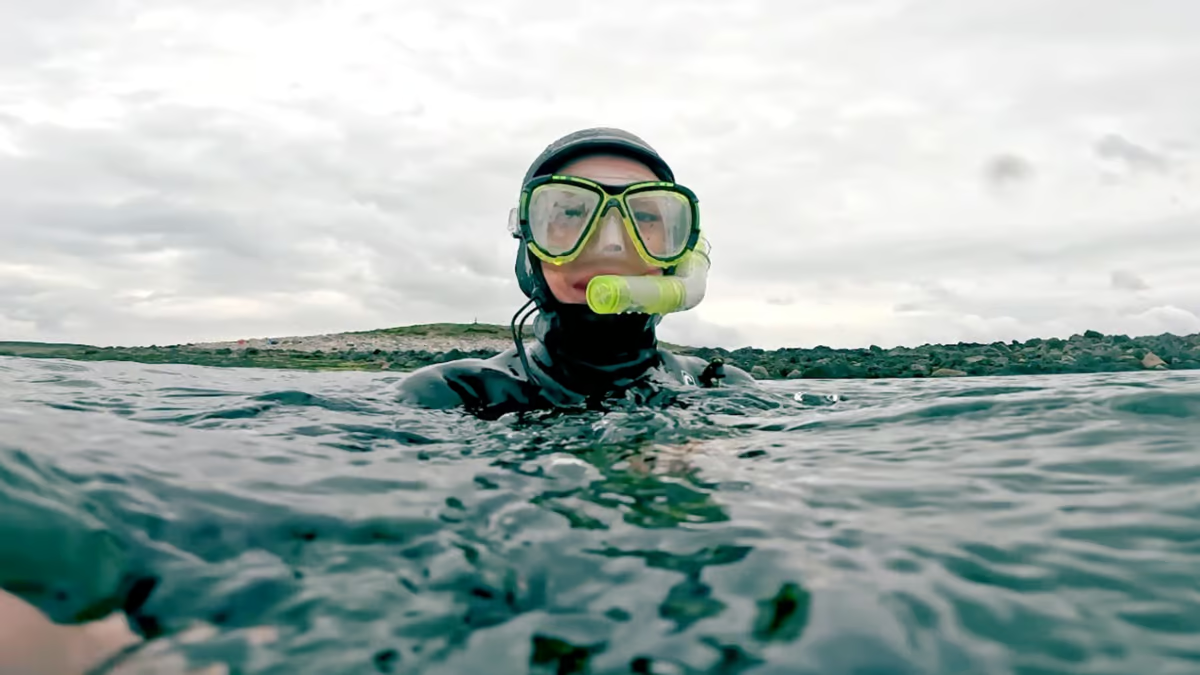
This is particularly important during first introductions to ocean activities. The first time putting your face in the water. Catching a small wave. Floating calmly in a sheltered bay. Snorkelling over shallow reefs. These are significant moments for beginners. If they are paired with cold and discomfort, they can create anxiety rather than confidence.
The goal is not to remove challenge from the experience. Some level of discomfort and uncertainty is part of learning in natural environments. But there is a difference between constructive challenge and unnecessary struggle.
Good preparation creates the conditions where positive learning can happen.
This also shapes how sessions are run. Ratios matter. Group size matters. The age and experience of participants matter. Conditions that suit one group may not suit another. Some days are ideal for surfing. Other days are better suited to snorkelling, rockpool exploration, or simply observing the ocean from the shoreline. The ocean decides what is possible, and part of good judgement is adapting accordingly.
Over time, these decisions become less about rigid plans and more about understanding the relationship between people, conditions, and environment. A sheltered bay on a windy day may provide better learning opportunities than a famous surf beach. Flat conditions that disappoint experienced surfers can become perfect conditions for younger participants building confidence in the water for the first time.
The more time you spend around the ocean, the clearer it becomes that safety is not just rules and equipment. Safety grows from awareness, gradual exposure, and experience. It develops through learning how to read conditions, understanding your own limits, and becoming comfortable enough to remain calm when things change.
Good equipment supports that process.

There is also something wider happening here culturally. For many people in Ireland, particularly inland communities or families without a strong swimming background, the ocean can still feel intimidating or “not for us.” Cost, knowledge, access, and fear all play a role in limiting participation. Creating more accessible pathways into the ocean means removing as many unnecessary barriers as possible.
Sometimes that begins with something as simple as helping someone stay warm enough to enjoy themselves.
Because enjoyment matters. Fun matters. Feeling comfortable enough to laugh, explore, and stay curious matters. These are often the foundations on which confidence is built.
In many ways, learning to prepare properly for the Irish coastline is itself part of ocean awareness. It teaches respect for conditions, attention to detail, and an understanding that nature does not adjust itself to our expectations.
The Atlantic can be cold, unpredictable, and challenging. But when people are prepared properly, those same conditions can become invigorating, rewarding, and deeply memorable.
Comfort does not remove learning from the experience.
Very often, it is what makes learning possible in the first place.