
There’s a certain serendipity about how Ocean Awareness continues to grow.
This week, that serendipity found me back on the beach with Seashore Safari—a programme that has evolved through years of engagement with Leave No Trace and the Irish Ocean Literacy Network. What began as conversations, shared ideas, and pilot sessions has now become part of something much larger: the Ocean Explorer programmes, delivered by the Marine Institute to primary schools across Ireland. Standing on the shoreline, watching young people discover the intertidal world for the first time, I’m reminded that meaningful Ocean Awareness doesn’t arrive fully formed. It grows—organically, collaboratively, and often unexpectedly.
Learning Is in the Doing
So much of what I understand now about Ocean Awareness programmes has come not from theory alone, but from practice. Learning happens in the doing—especially when you are doing something new. You might arrive with ideas, concepts, and carefully considered objectives, but once you step onto the beach with a group, those ideas are tested in real time.
You are suddenly required to explain your objectives clearly to others, to articulate them in ways that make sense to different ages, abilities, and learning styles. You’re forced to ask yourself: How do I explain this better? How can I improve this session? Reflection becomes unavoidable. Direct outcomes can be compared to objectives, but it’s often the indirect outcomes—the ones you didn’t plan for—that shape your learning most.
The Power of Unintended Outcomes
Some of the most valuable lessons emerge unexpectedly. How do you clearly explain the difference between honeycomb worms and barnacles to a child seeing both for the first time? How do you teach someone to move safely on slippery rocks in a rockpool without dampening their sense of adventure?
Then there are the moments when children get wet—inevitably. They encounter the splash zone, crouch over rockpools, balance on uneven stones in the intertidal zone. These moments are not distractions from learning; they are the learning. They reveal how participants engage with the environment and with risk, curiosity, and confidence.
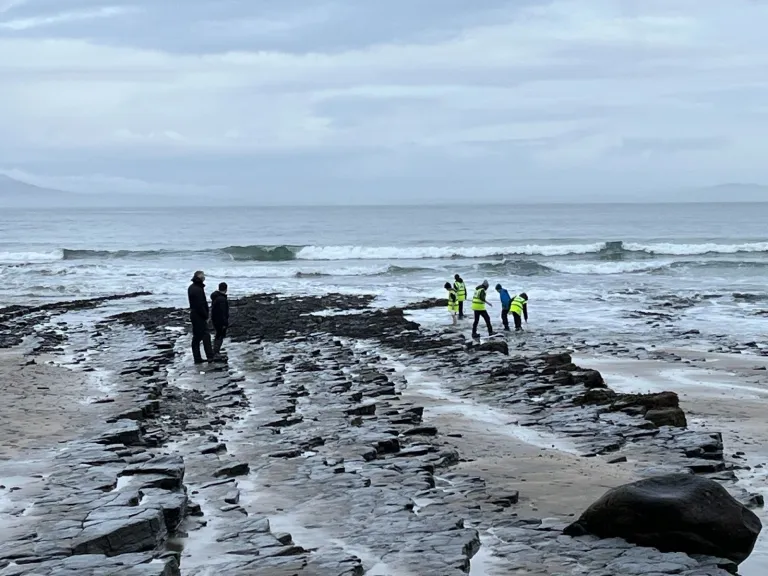
Introducing new participants to the beach is a skill in itself. What you teach, how you teach it, and in what sequence matters deeply. Different group sizes produce different outcomes. Varied levels of understanding require adaptability. Teaching while doing—rather than before or after—has a profound impact on how deeply lessons land and how much participants’ understanding evolves.
Ownership, Curiosity, and Blue Mind
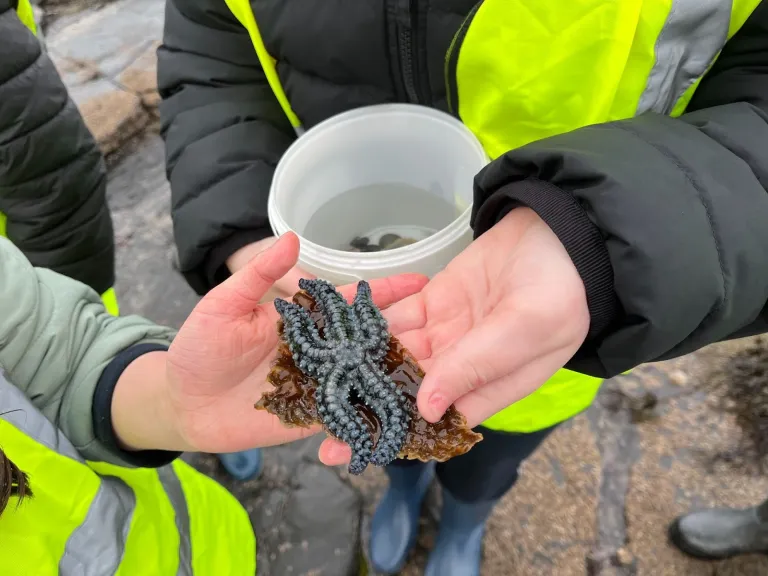
For the children, finding a starfish matters. Discovering animals and plants matters. Working things out for themselves matters even more. Some go on to teach others—siblings, parents, grandparents—long after the session ends. This sense of ownership is powerful. It reflects the principles of active learning and aligns closely with Blue Mind Theory: the idea that connection with water and blue spaces supports well-being, curiosity, and emotional regulation.
Choosing the right place to begin—physically and pedagogically—is crucial. Introducing someone to blue spaces isn’t just about location; it’s about timing, conditions, and readiness. In January, the cold is a factor. Wind sharpens the senses. Yet these elements can also open minds to new pathways, building resilience and a deeper respect for the marine environment.
The Role of Science in Ocean Awareness
Science underpins effective Ocean Awareness. Whether through sessions, lessons, projects, or long-term programmes, science provides the structure that allows curiosity to flourish. It helps participants move from simple observation to understanding systems, relationships, and change. In programmes like Seashore Safari, science is not abstract—it’s tactile, visible, and alive beneath your feet.
Outdoor Education as a Co‑Educator
Outdoor education offers a powerful pedagogical approach. It situates learning in nature, connecting participants directly with place while cultivating essential life skills and sustainability competences. It supports learners in valuing and protecting natural resources, while also building independence, resilience, and well-being.
Outdoor education can range from using nature as a simple backdrop to creating fully transformative experiences that reshape how learners engage with the world. When designed well, nature becomes more than a setting—it becomes a co‑educator. Achieving this requires quality pedagogy and strong leadership, but the rewards are profound.
These are the kinds of beach sessions I’m running now, in service of local youth and wider Ocean Awareness goals. They are shaped by experience, reflection, and collaboration—and by the understanding that growth often comes through serendipity, one tide, one discovery, and one question at a time.

Get Involved
Ocean Awareness programmes are open to anyone who feels curious about the sea and wants to deepen their connection to it. Whether you are an individual, a local family, a school, a youth group, an organisation, or a corporate team looking for meaningful engagement with the marine environment, there are many ways to take part.
If you would like to participate in a session, collaborate on a project, or explore how Ocean Awareness programmes can work for your community or organisation, I’d love to hear from you.
Email: info@oceanawareness.ie
Connect: Find Ocean Awareness on LinkedIn and Facebook for updates, stories from the shore, and upcoming opportunities.
Ocean Awareness grows through shared experiences, partnerships, and people willing to step onto the beach, ask questions, and learn together.
